
GSMA leads launch of pan-African AI language initiative
Five nations join GSMA’s ATLAS Umoja AI leveraging Nigeria’s N-ATLAS model

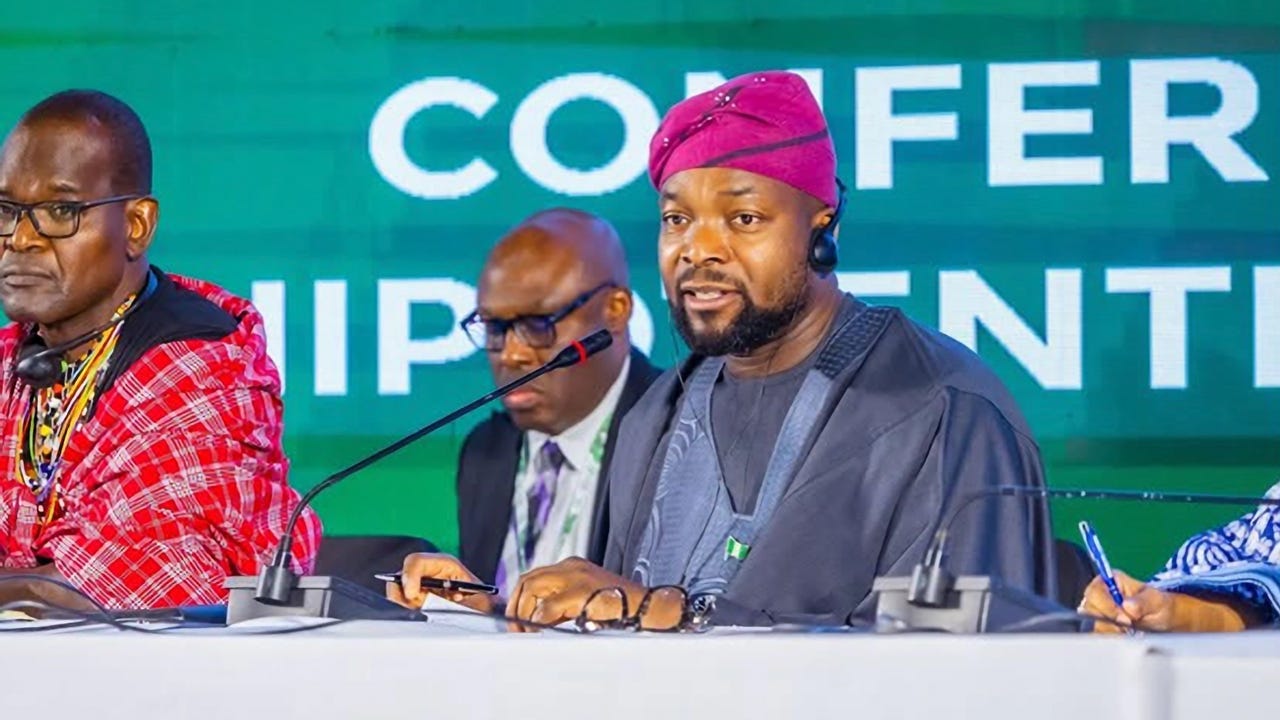
#Nigeria #Africa #languages - Mobile communications association the GSMA has partnered with the governments of Benin, Kenya, Namibia, Nigeria and Togo to launch ATLAS Umoja AI, a pan-African initiative to develop AI models that understand and operate in African languages. The launch follows the Abuja Ministerial Declaration on Meaningful Connectivity, adopted at the African Telecommunications Union (ATU) conference in Abuja, which commits governments to modernising technology regulation and expanding infrastructure. Commenting at the conference, Nigeria’s Minister of Communications, Innovation and Digital Economy Dr Bosun Tijani said fewer than 2 percent of Africa’s languages currently receive meaningful support from modern AI platforms.
SO WHAT? - More than 2,000 African languages exist, 54 countries are so far included in the scope for ATLAS Umoja, and today only one has a live national sovereign AI model. The scale of the imbalance compared to high resource languages such as English, French and Spanish is enormous. Nigeria's N-ATLAS initiative is already producing working AI tools that are capable in Yoruba, Hausa and Igbo languages, proving that once a local-language models exists, developers move fast to build things people actually need. ATLAS Umoja aims to dramatically increase the number of African models and the number African languages supported by them.
KEY POINTS:
The GSMA and the governments of Benin, Kenya, Namibia, Nigeria and Togo have launched ATLAS Umoja AI to strengthen collaboration on African language AI, in collaboration with private partners Awarri, Zindi, Pawa AI and Mozisha,
The initiative pools regional datasets and research to develop scalable AI systems capable of understanding and operating in African languages, complementing existing national AI programmes.
Angela Wamola, Head of Africa at the GSMA, said the initiative will help tackle digital illiteracy and the lack of locally relevant content, two of the biggest barriers to internet adoption across the continent.
Nigeria’s Minister of Communications, Innovation and Digital Economy Dr Bosun Tijani said less than 2% of Africa’s languages receive meaningful support from current AI systems, despite the continent holding around a tenth of the world’s languages.
ATLAS Umoja builds on Nigeria’s N-ATLAS, described as Africa’s first government-wide open-source large language model, launched in collaboration with the UN General Assembly the previous year.
Private sector partners Awarri and Zindi will engage local developers and data scientists to help build foundational AI models under the initiative.
The launch builds on the newly established AI for Good Global Commission, with ministers from Nigeria, Namibia and Togo, who sit on the Commission, committing support for ATLAS Umoja.
The Abuja Declaration and ATLAS Umoja were both unveiled at the ATU Conference of Plenipotentiaries in Abuja, hosted by the Nigerian Communications Commission (NCC) and attended by Nigerian Vice President Kashim Shettima’s office.
Nigeria’s NCC Executive Vice-Chairman Dr Aminu Maida called for African telecom regulators to build more systematic cooperation ahead of the 2026 ITU Plenipotentiary Conference in Doha, Qatar.
ZOOM OUT - ATLAS Umoja builds directly on N-ATLAS, the Nigerian government's own open-source large language model trained to understand and generate the country's languages. Nigeria is one of the world’s most linguistically diverse countries, with more than 500 languages. N-ATLAS was built to preserve the nation’s language diversity, whilst giving developers a foundation for local-language tools in education, governance, health and commerce. Nigeria open-sourced the model specifically to invite researchers and communities elsewhere to build on it, describing it as a national commitment to unity and inclusion as much as a technical project. That's the template ATLAS Umoja now scales across five countries.
[Written and edited with the assistance of AI]
Source: GSMA, MCIDE, various
LINK
ATLAS Umoja (website)