
Kenya’s Senate orders new AI policy following new AI bill
Kenya debates comprehensive AI regulation as new AI bill proposed

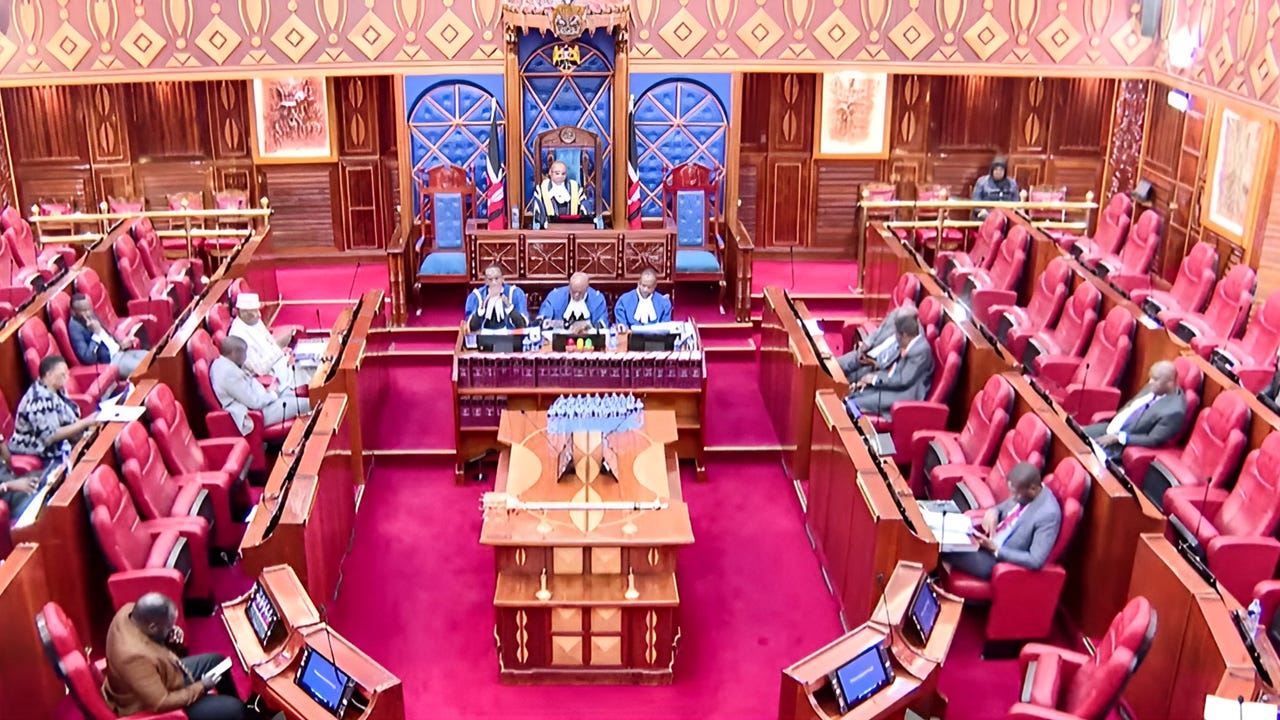
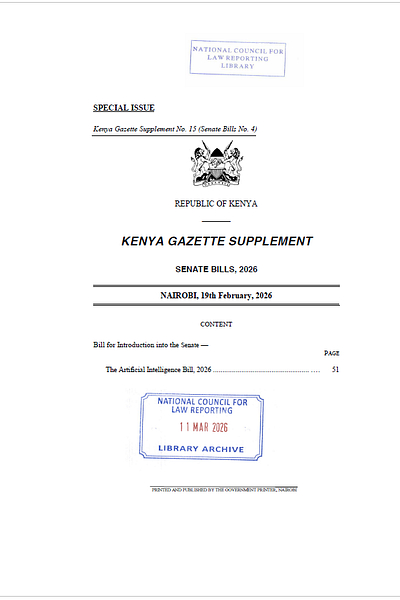
#Kenya #policy – Kenya’s Senate has ordered the country’s Ministry of Information, Communication and Digital Economy to draft a national AI policy, following the introduction of the Artificial Intelligence Bill 2026 to the Senate. The bill, sponsored by nominated Senator Karen Nyamu, proposes fines of up to KES 5 million (approx. $40k) and prison sentences of up to two years for the creation or distribution of harmful AI-generated content. It proposes the establishment of an independent Office of the Artificial Intelligence Commissioner to regulate and enforce the law. The Senate’s directive to the ministry covers five areas: local AI research and development, ethical guidelines, regulatory sandboxes, public-private digital skills partnerships and the integration of AI and coding into the national education curriculum.
SO WHAT? – Kenya has a High Court order from February 2026 demanding action on AI regulation, a proposed bill now before the Senate, and a ministerial directive to produce a national policy. That’s more movement than we’ve seen in the past year or so, following an unsuccessful bid to introduce an AI law in 2023. For a country that has positioned itself as East Africa’s technology hub, the absence of an AI governance framework is perhaps an increasingly visible gap, although experts are wary of overregulating a sector that remains in its infancy. The new developments do, at least, confirm increasing demand for AI regulation and the convergence of interests.
Here are some key points about the new bill and government order:
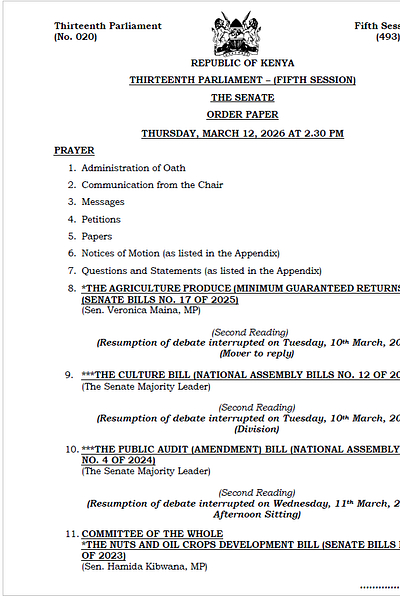
Kenya’s Senate has directed the Ministry of Information, Communication and Digital Economy to develop a national AI policy during its fifth session on March 12th, following the introduction of the Artificial Intelligence Bill 2026 to parliament. The policy will address local AI research, ethical guidelines, regulatory sandboxes, digital skills partnerships and AI education integration.
The Artificial Intelligence Bill 2026 was sponsored by nominated Senator Karen Nyamu in February, who introduced the legislation after manipulated AI-generated images of her circulated online. A personal experience may have helped shaped the bill’s focus on synthetic media and digital impersonation.
The bill proposes the creation of an independent Office of the Artificial Intelligence Commissioner, headed by an appointee with at least ten years of professional experience in AI, law or ethics. The Commissioner would investigate complaints, impose penalties and manage regulatory sandboxes.
Anyone found guilty of using AI to generate or distribute content using another person’s image, voice or likeness without consent (where that content causes misinformation, harm, defamation or privacy violations) could face fines of up to KES 5 million (approx. $40k), two years in prison, or both.
The bill introduces a four-tier risk classification system for AI systems, modelled on emerging international frameworks including the EU AI Act. Systems are categorised as unacceptable risk, high risk, limited risk and minimal risk, with stricter obligations applied to higher-risk deployments.
A high-risk AI systems category would cover healthcare, education, agriculture, finance, security, employment and public administration. AI systems under this category would require mandatory risk and human rights impact assessments before deployment, with records of datasets and performance metrics kept for at least five years.
Citizens would gain the right to human review of automated decisions affecting them in areas such as employment screening, loan approvals, welfare support and insurance assessments. They would also have the right to challenge outcomes and have their views heard.
Companies deploying AI systems would be required to clearly explain how their technology operates, disclose its purpose and limitations, and detail measures taken to address algorithmic bias. Failure to provide this information could attract fines of up to KES 1 million (approx. $7,700).
The bill aligns with Kenya’s National Artificial Intelligence Strategy 2025–2030 and requires the regulatory framework. Meanwhile, the law would be reviewed every three years by the Cabinet Secretary, acknowledging that AI technology evolves faster than most legislation can keep pace with.
The proposed legislation follows a High Court of Kenya order issued on 6 February 2026 in response to an urgent petition citing delays in introducing AI regulation, giving the bill additional legal and political momentum.
ZOOM OUT – The Artificial Intelligence Bill 2026 is not Kenya's first initiative to push for AI regulation. In November 2023, a petition organised by the Robotics Society of Kenya introduced the Kenya Robotics and Artificial Intelligence Society Bill to parliament, proposing a dedicated regulatory body to oversee both fields. The bill was reviewed by the National Assembly's Communications Committee in early 2024, but ran into significant opposition from technology experts, who argued it was too focused on control and could stifle innovation. A separate motion in April 2023 had urged the government to establish an AI governance framework and ethical guidelines, but produced no legislation. The Artificial Intelligence Bill 2026 therefore draws on the learnings of past proposals, debates and reviews about AI regulation.
[Written and edited with the assistance of AI]
DOWNLOADS
Read more about AI in Kenya:
Kenya AI hub to fund datasets for 50 African languages (Africa AI News)
Kenya launches ambitious AI roadmap for digital future (Africa AI News)
Kenya grants just 5 days for feedback on AI strategy (Africa AI News)