
New Algeria AI startup cluster, Egyptian LLMs on a tear
Weekly News Digest ...

Good morning, and welcome to this week’s issue of Africa AI News – Weekly News Digest.
This has been a spectacularly busy news week, particularly in North Africa, with major developments in Egypt, both technical and property, and in Algeria. Also Libya, still bitterly divided between warring regimes, has been moving forward with some really interesting tech implementations, like AI-controlled oil well drilling.
While so much is going on at the practical AI coal face, governments and policymakers are still only hand-waving at the Augean stables of national AI policy. Case in point: the draft AI policy for South Africa, Africa’s largest market for AI tech production and adoption, is being hotly debated.
The general feeling is that the policy is big on concept, big on government control, not so big on practicalities. This is unsurprising, if you go back to the original National Discussion Document of 2023, the mistake was already being made.
The thinking behind national strategies is outdated. Back then, the loudest voices in the room were global tech companies, and management consultancies. They still are, making promises they can’t deliver on.
National policy is derived from this disastrous assumption that AI does what it says on the tin. It will take over from humans, do things better, faster cheaper. But policy still does not address AI’s huge limitations and fundamental flaws. AI is brilliant. But at many, many things, it is just bad. It gets things horribly wrong, is glib and confident while offering (sometimes hilarious) hallucinations, and is funded by our children’s futures. Not to mention that global AI tech giants are more often than not led by glad-handing sociopaths.
It is time that governments stop believing the self-serving fantasies of the AI cheerleaders, and start asking hard questions about its real world capabilities, limitations and infrastructural requirements. Because this is what serious policy needs to consider.
On with this week’s issue.
/Roger
Datacentres and CoEs
Algeria builds AI & cybersecurity startup cluster
#Algeria #startups — Algeria has launched a national AI and cybersecurity startup cluster in Sidi Abdallah. The Abdelhafid Ihaddaden Scientific and Technology Hub connects universities, founders and investors to accelerate commercialisation, with plans to replicate the model nationwide by 2027. (Middle East AI News)
New 500-acre AI Campus planned for New Cairo
#Egypt #innovation — Orange Egypt, Paragon | Adeer and Plug and Play are developing a 500-acre (2 sq.km.) AI Campus in New Cairo. The initiative aims to support 100 startups by 2030 through infrastructure, training and global market access, strengthening Egypt’s innovation ecosystem. (Middle East AI News)
Egypt unveils EGP1.4T AI-enabled The Spine cognitive city
#Egypt #smartcities — Talaat Moustafa Group is leading the development of “The Spine”, a EGP 1.4 trillion ($27-billion) cognitive city project in New Cairo. The Spine is designed as an AI-enabled economic hub, integrating business, residential and financial zones, aiming to boost GDP, attract global FDI. (Egypt Today)
Valeo expands Cairo AI development hub
#Egypt #automotive — Valeo has launched an AI Development Centre in Cairo with over 50 engineers, reinforcing Egypt’s role in its global software operations. The company already produces around half its software locally, with AI contributing to 35% of validated code. (Middle East AI News)
LLMs
TokenAI releases Horus LLM
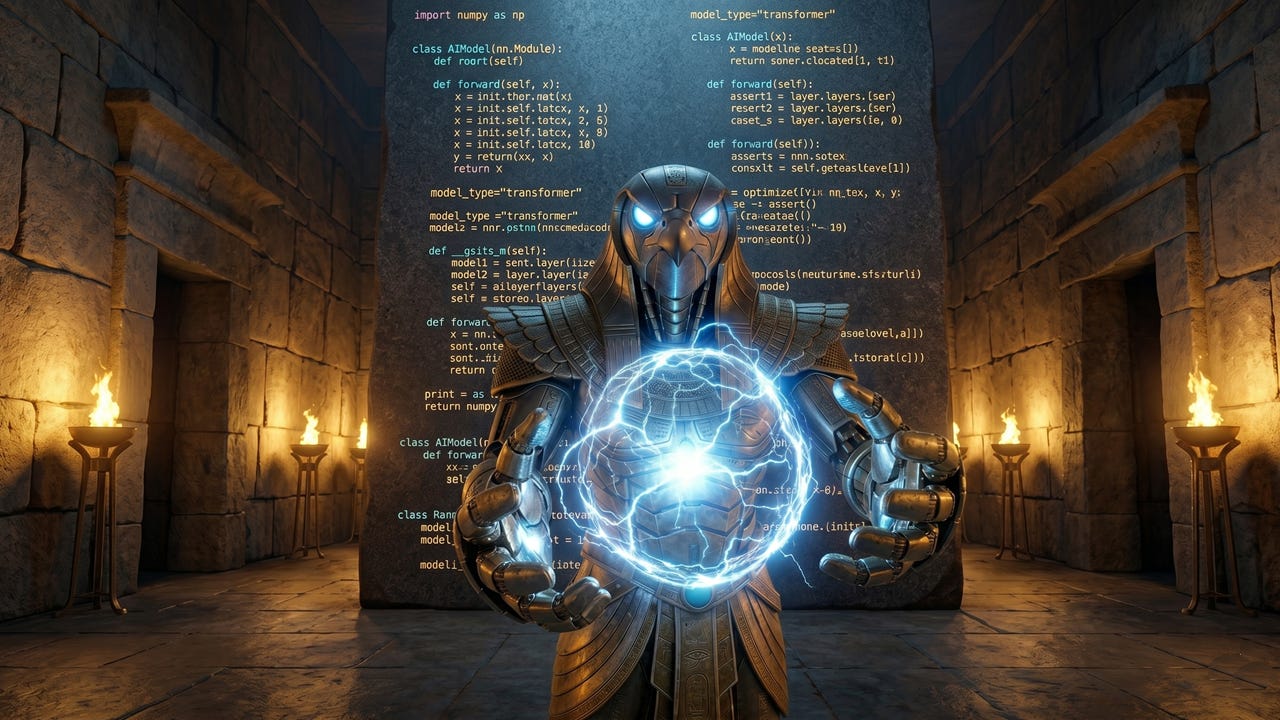
#Egypt #LLMs — Cairo-based TokenAI has released Horus 1.0-4B, a compact multilingual language model trained on 1 trillion tokens. The model outperforms several larger peers on benchmarks. Arabic-optimised, and available in seven variants to suit different hardware and deployment environments, Horus has been released as open source via a MIT licence. (Middle East AI News)
Applications
Libya executes AI-driven oil drilling operation
#Libya #energy — Libya has completed its first AI-driven drilling operation in an oilfield, marking only the second such deployment globally. The project used advanced analytics to optimise drilling performance, including fully automated drilling during some key phases. (Libya Observer)
Tadhamun Bank Libya deploys AI customer chatbot
#Libya #chatbots — Tadhamun Bank in Libya has implemented an AI-powered chatbot developed by JMR Infotech to improve customer engagement. The system enables automated responses across digital channels, enhancing service efficiency and accessibility. (Finextra)
Almadar Aljadid telecoms rolls out AI chatbot in Libya
#Libya #applications — Also in Libya, telecom operator Almadar Aljadid has partnered with Egypt’s WideBot to deploy an AI chatbot, improving customer service and operational efficiency. The solution supports multilingual interactions and automates routine queries. (Connecting Africa)
Mozambique digitises health facilities nationwide
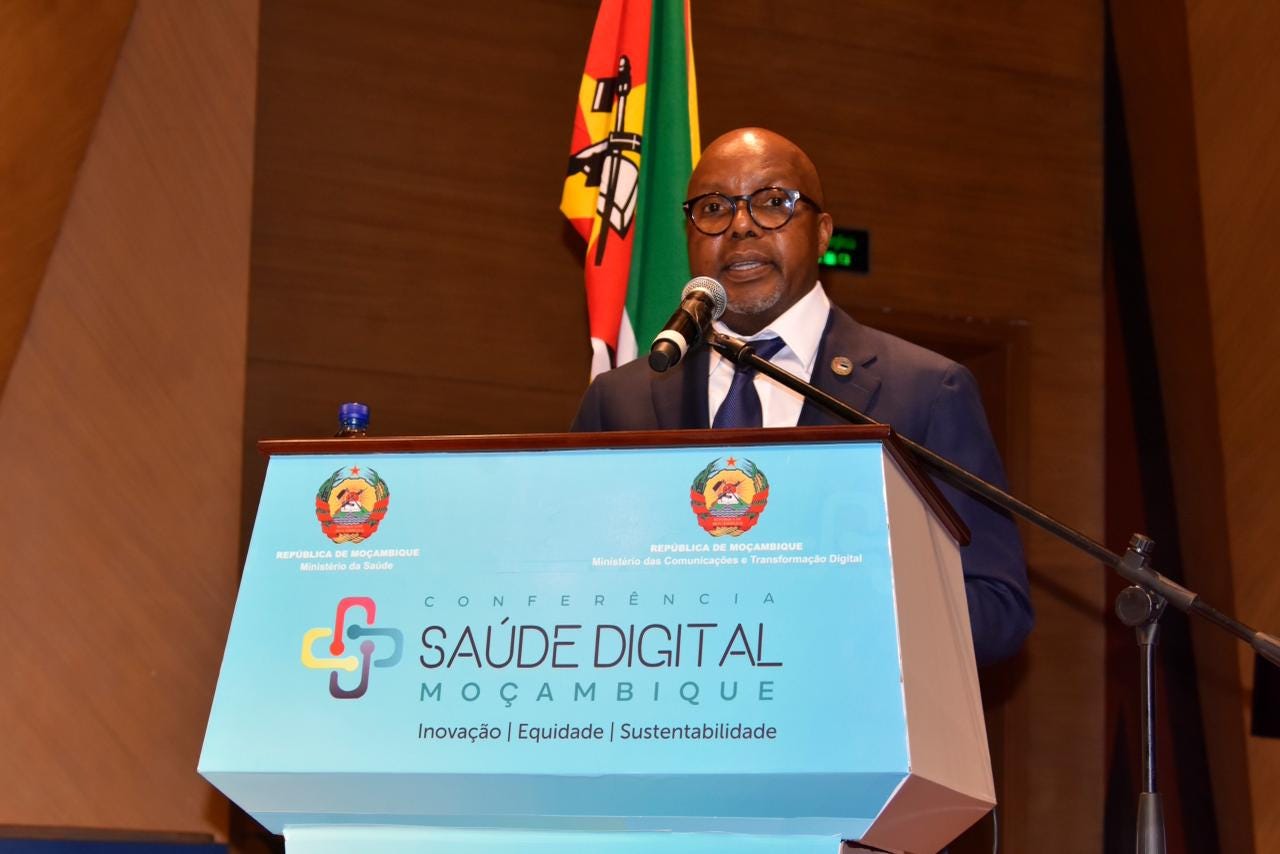
#Mozambique #healthcare — Mozambique is rolling out a national plan to digitise health facilities, aiming to improve data management, patient tracking and service delivery. It will initially digitise 63 health facilities, with a project budget of $40 million, disbursed by the World Bank. The initiative includes electronic health records and integrated systems to support decision-making, with AI-enabled analytics to enhance disease monitoring and resource planning. (Club of Mozambique)
Uganda launches AI partnership for smart agriculture
#Uganda #agriculture — Uganda has launched a new partnership with the United Nations Health Industry Foundation and the Prince Kimbugwe Foundation to deploy AI technologies in agriculture, targeting improved productivity and climate resilience. The initiative will support farmers with predictive analytics, crop monitoring and data-driven decision tools. (African Trade Chamber)
Botswana Minerals uses AI to refine copper targets
#Botswana #mining — Botswana Minerals has deployed AI-driven modelling to improve copper exploration targeting in the Damara Belt, enhancing geological precision and reducing exploration risk. The company says the technology integrates geophysical and geochemical datasets to identify high-probability deposits, with initial success being a 9.5-kilometre copper anomaly, a 20-kilometre silver anomaly, and a 2.4-kilometre lead-zinc core zone. (FurtherAfrica)
Policy
Ghana advances national AI strategy rollout
#Ghana #policy — Ghana is progressing with its national AI strategy, aimed at driving innovation, economic growth and public sector transformation. The framework focuses on infrastructure, skills development and governance. Officials emphasise the role of AI in enhancing productivity across industries while ensuring ethical deployment and inclusive benefits for citizens. (Ghanaian Times)
Algeria unveils IP policy for higher education
#Algeria #policy — Algeria has introduced a national intellectual property policy model for higher education institutions, aiming to enhance innovation management and research commercialisation. Developed with the World Intellectual Property Organisation, the framework supports universities in protecting and leveraging inventions. The policy is expected to strengthen technology transfer and foster a more robust research and innovation ecosystem. (World Intellectual Property Organization)
Burundi unveils national AI integration framework
#Burundi #policy — Burundi has introduced a national framework to integrate AI into governance and economic development, outlining priorities for public sector digitisation and private sector innovation. The strategy focuses on capacity building, infrastructure and regulatory alignment to support adoption. Officials say the framework will enhance service delivery, improve efficiency and position the country within the regional digital economy landscape. (TechAfrica News)
African Union appoints Abiy Ahmed AI champion
#Africa #policy — The African Union has appointed Ethiopian Prime Minister Abiy Ahmed as its champion for AI and digital health, signalling a push to coordinate continental strategies. The role will focus on advancing innovation, strengthening health systems and promoting cross-border collaboration. The appointment underscores growing political commitment to leveraging AI for socio-economic development across member states. (Fana Media Corporation)
South Africans outspend Netflix on AI tools
#SouthAfrica #adoption — We’re not going to summarise this story because it’s nonsense. (MyBroadband)
Education
Tunisian students create AI startup, sets Guinness record
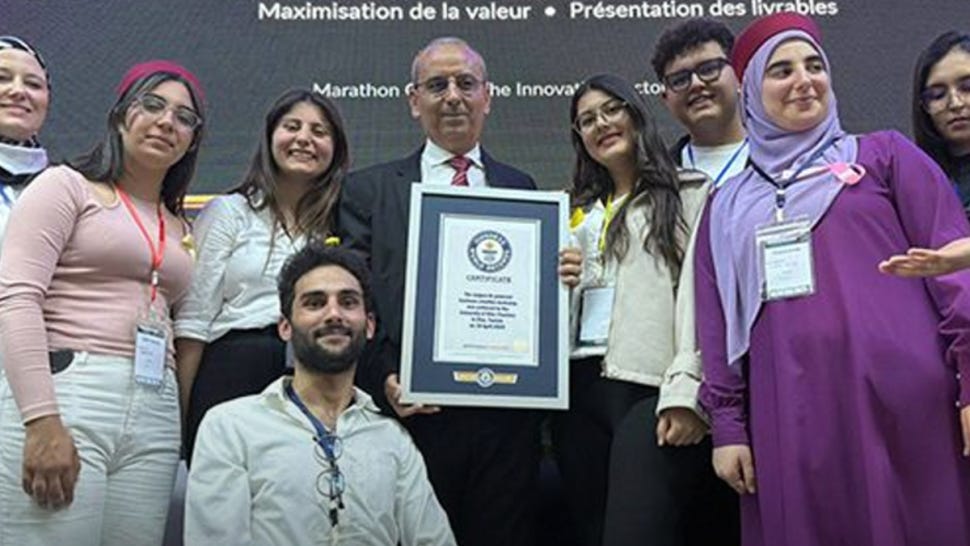
#Tunisia #innovation #hackathon — A student team from the University of Sfax has achieved a Guinness World Record building a complete AI startup in three hours. It’s a little dubious, depending on how you define “complete”, “three” and “is”. The challenge had students from major institutions at Sfax, including the Faculty of Economic Sciences and Management and the Higher Institute of Business Administration, work together on tech, human resources, marketing and finance. (Arab Founders)
Algeria wins four medals at AI Olympiad
#Algeria #education #AIOlympiad - Algeria’s national team secured two gold and two silver medals at the African AI Olympiad in Tunisia. The achievement reflects growing national investment in digital skills and youth talent development as the country builds its future technology workforce. (Radio Algeria)
[ This newsletter was human grep’d and AI cat’d ]