
Scandal in SA over AI policy draft, Uganda in on $10-B East African Community AI backbone
Weekly News Digest ...

Good morning, and welcome to this week’s issue of Africa AI News – Weekly News Digest.
Slow news week, but some feel-good stories about an application for AI doing eye tracking to give sight impaired computer users new tools, growing communities of AI-tastic developers in Nigeria, and funding for an AI-powered book reading startup.
But the news that has been sucking the attention of many in the African AI space is the “scandal” around AI use in generating South Africa’s freshly minted new draft AI policy.
Politicians were swift to beat their chests and howl: “This debacle represents one of the most alarming failures of ministerial oversight and intellectual rigour in the recent history of South Africa’s digital governance,” said parliamentary chief whip Imran Subrathie (ANC) in a statement.
Oh the pearl clutching! The pulpit thumping!
AfricaAINews has been working through the document, and there is no scandal. The style is very consistent, and does’t smell that much of AI. It appears AI was used in pulling together relevant research in early stages, and that the crime was that in a list of 67 references in an appendix there were some flaky hallucinations referring to non-existent source. Only 24 actually appear in the body of the document (and these were all legit). The long reading list was likely from an early draft and left in as an editing oversight. For what it’s worth, the referenced research inputs were in the stage-setting preamble, not the meat of the policy directives/interventions sections.
Essentially the “scandal” is a bullshit story, more about settling political scores. The ANC, which leads the government of national unity (coalition) along with the DA, is putting the boot in because the communications minister is DA, and they’ve not been getting on.
We will publish our in-depth soon, but top-line findings from AfricaAINews.com:
The Draft South Africa National AI Policy is a generally sound document that takes into consideration many of the key issues countries are grappling with, but is fundamentally based on definitions and thinking of three years ago, when AI companies could do no wrong, and it was taken as read that LLMs could do what it said on the tin.
There is little or no real discussion of the limits of AI, its real-world effectiveness, and its ability to reliably do work that humans need to do (it makes stuff up, gets things wrong, a lot).
It defines AI fairly generally, talking about Machine Learning, Neural Networks, but then immediately ditches inclusion of any techs other than LLMs, as if it was the only show in town
The definition of AI is poor, which leads to many questionable lines of thinking. It defines AI as “artificial” (indicating non-natural) and “intelligence” (the ability to reason, perceive, learn, and generate insights). A key missing element in “intelligence” is the ability to self-correct through intuitive thinking (let’s call it common sense). AIs do not possess imagination or intuition, and so are 100% confident sounding, and don’t check their thinking.
The policy starts off very narrowly targeting education, healthcare and agriculture (with Public Administration thrown in to test application), but then almost immediately throws it open to any sector.
Policy interventions are big on governance (as noted by Stafford Masie in his open letter that seems to launch from a quick scan of the first few pages before taking off into stratospheric AI boosterism), but specific interventions in the document are also very big on infrastructure and tech startup investments. Who is paying for this? Is it a good idea for the South African taxpayer to throw money down the black hole of AI funding?)
The draft AI policy is 86 pages long, AfricaAINews.com has 21 pages of excerpts and notes we’re working on to turn into a digestible form. Coming soon. Promise.
On with this week’s issue.
/Roger
(note cover image photo of SA Minister of Communications and Digital Technologies, Solly Malatsi, by Misha Jordaan/Gallo Images)
Applications
Malawian innovator wins ICT award for assistive AI
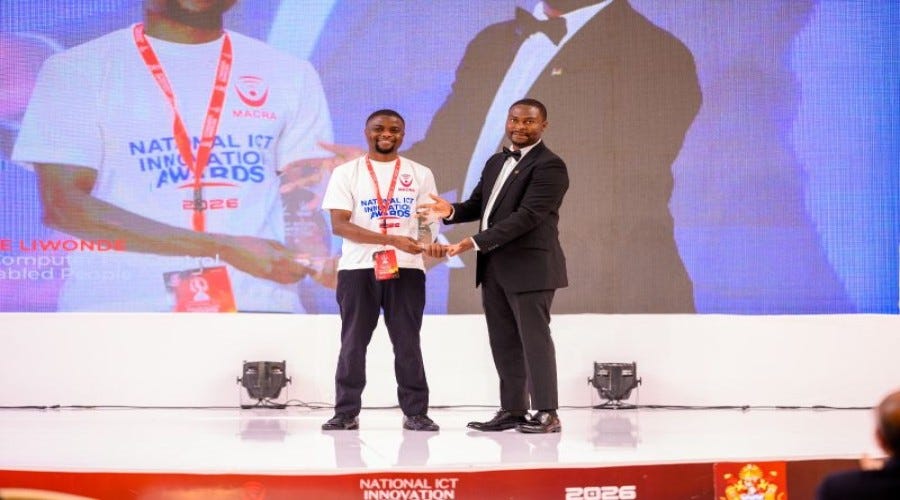
#Malawi #applications — A Malawian developer has won a top award at Malawi’s 2026 National ICT Innovation Awards with an AI-powered assistive technology aimed at improving accessibility for people with vision impairment. The AI-powered desktop eye-control system enables individuals with conditions such as cerebral palsy or quadriplegia to operate a computer using only eye movements. (Tech Review Africa)
SA’s Home Affairs suspends officials over fake AI references
#SouthAfrica #applications #publicsector — South Africa’s Department of Home Affairs has suspended officials after discovering falsified AI-related qualifications and references. The action follows an internal review led by Minister Leon Schreiber, raising concerns about governance and skills verification in the public sector. This comes hot on the heels of the AI Policy document references “scandal”, although this is actually serious (see note above in introduction). (TechCentral)
Education
Egypt and Intel expand AI and digital skills partnership
#Egypt #policy — Egypt’s Ministry of Communications and Information Technology and Intel Corporation are deepening collaboration on AI strategy, digital infrastructure and talent development. The partnership emphasises skills training, cybersecurity and advanced infrastructure to accelerate Egypt’s digital transformation. Just talks now, expected to turn into an MoU. Intel is of late resurgent, after being late to the AI party, especially as compute requirements shift back to CPU and away from Nvidia’s GPU approach. (TechAfrica News)
Policy
Morocco faces 1.3 million AI-driven job losses
#Morocco #jobs - Morocco could see more than one million net job losses by 2030 due to artificial intelligence, according to a new report. While 4.6 million roles may be affected, limited digital job creation and structural challenges such as skills gaps risk intensifying labour market disruption. (Morocco World News)
Funding
East Africa builds regional AI backbone with $10bn push
#Uganda #infrastructure — Uganda has thrown its hat into the ring with the East African Community (EAC) to build a regional AI backbone, intending to shift from fragmented policies to coordinated execution. Plans include a Regional AI Technologies Fund and shared infrastructure, supported by a $10 billion continental initiative, with funding driven by the African Development Bank (AfDB) and the United Nations Development Programme (UNDP). (The Kenyan Wall Street)
Egypt edutech startup secures $1.45M funding for AI reading
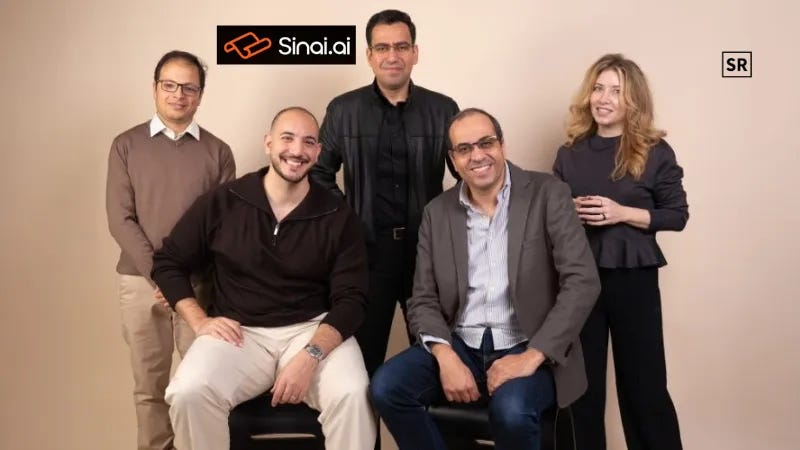
#Egypt #funding — Startup Sinai AI has raised funding to scale its AI-driven reading platform aiBook, which is designed to enhance literacy and engagement. The company uses AI to personalise (licensed) content, with interactive elements and text to speech. The finance round was led by KAUST Innovation Ventures and DisrupTech Ventures, with Maza Ventures, YOUXEL Ventures and angel investors kicking in. (Daba Finance)
Algeria launches national AI skills training programme
#Algeria #education — Algeria has introduced a national AI training programme aimed at strengthening digital skills and preparing a future-ready workforce. It includes a 12-week training segment with some real-world project experience, and targets 500,000 ICT specialists, delivered at the El Rahmania National Specialized Vocational Training Institute in Algiers, where a business incubator has been opened to support entrepreneurs. (Ecofin Agency)
Events
DeepMinds launches DeepX summit in Algeria
#Algeria #DeepTech - DeepMinds has launched DeepX, a regional summit in Algiers designed to turn scientific research into commercial ventures. Backed by multiple government ministries, the initiative brings together global researchers, AI experts and industry leaders. (Middle East AI News)
Cursor AI kicks off Nigerian chapter with Lagos gathering
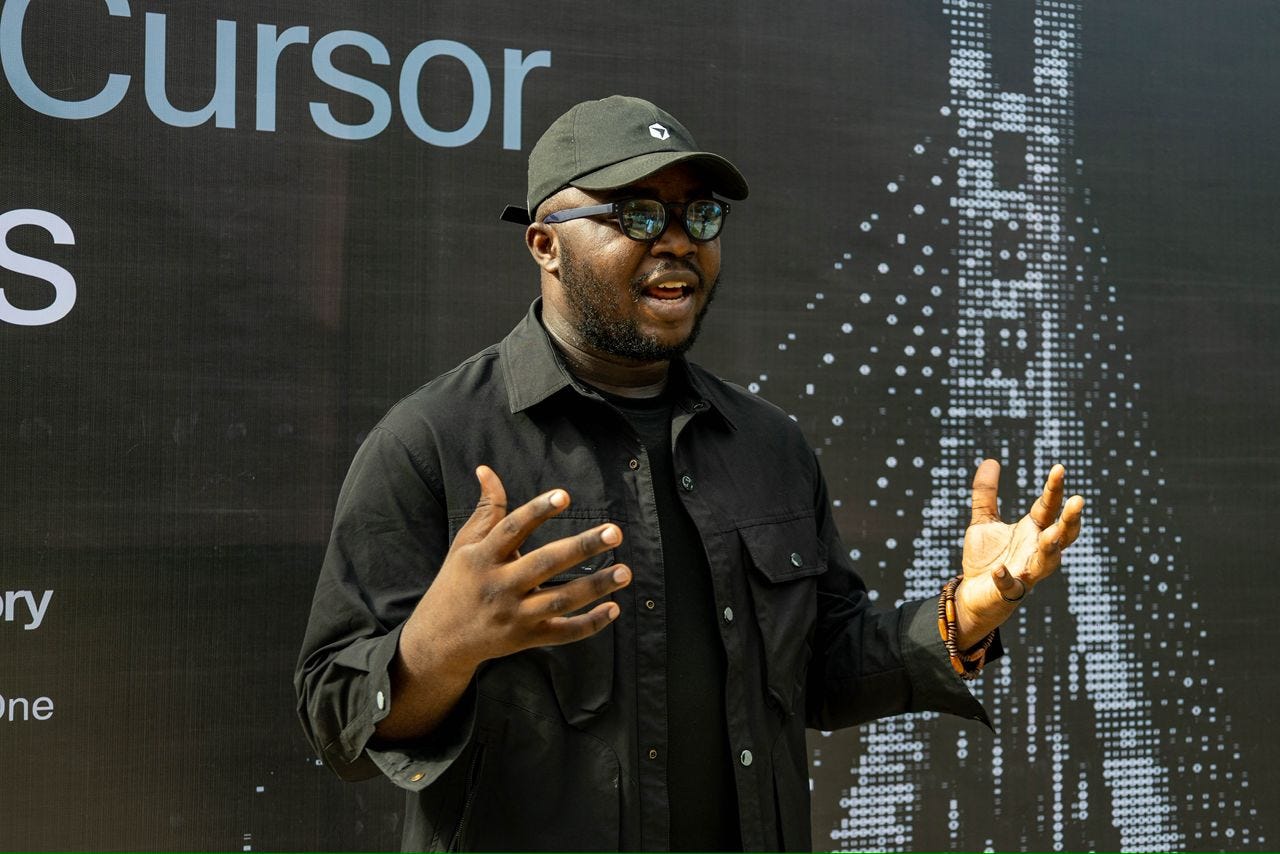
#Nigeria #applications — Cursor, a popular AI coding tool from the USA, ran a Cafe Cursor meetup event in Lagos. It is looking to expand into Nigeria, targeting developers with tools to build and deploy AI-driven applications. With initially 100 local developers expected, it got 700 applications, suggesting a real hunger for access to better tech tools. (Punch)
[ This newsletter was human grep’d and AI cat’d ]