
South African broadcaster's bold leap: interactive AI training on streaming
SABC Plus plus content from Microsoft and tech services by AI startups, young people can become more employable

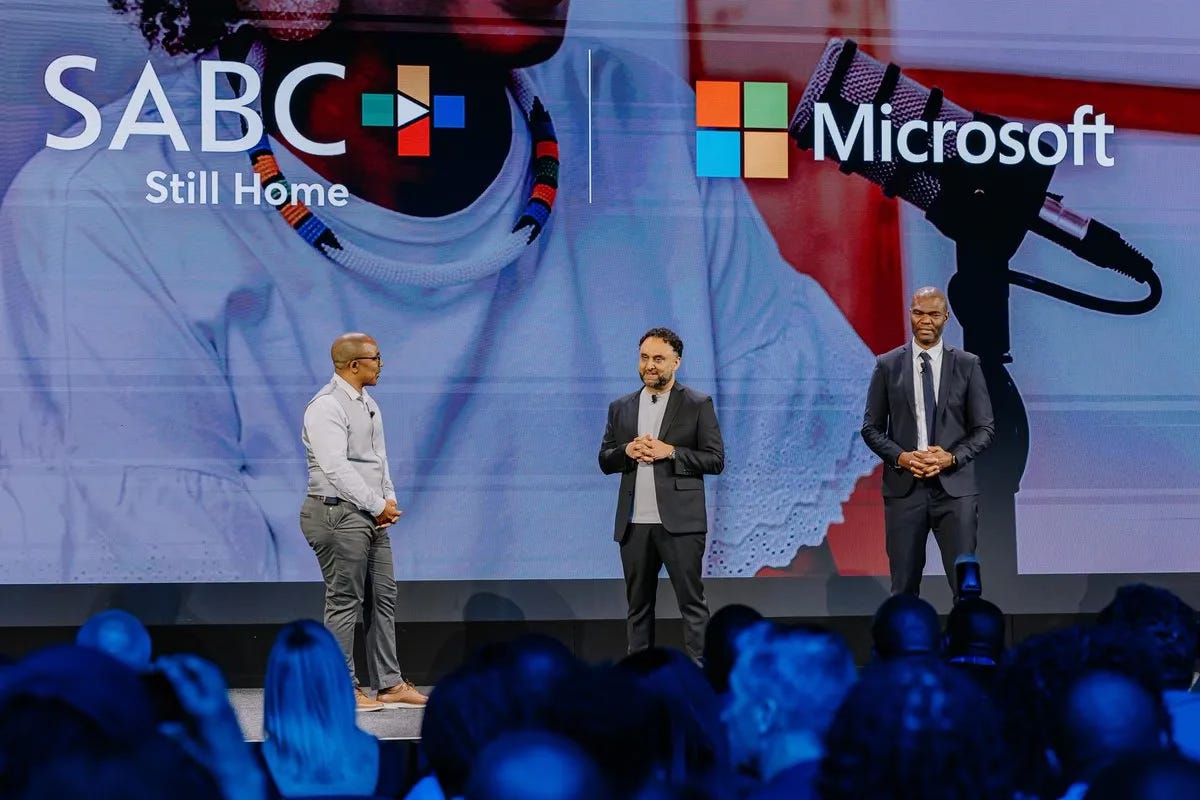
#SouthAfrica #education — In late January Africa AI News covered the announcement by the SABC (South Africa’s national public broadcaster) that it was making interactive AI training content available over SABC Plus, its streaming service.
We take a deeper dive into this story, with AfricaAINews.com sitting with Tiara Pathon, Microsoft Elevate AI Skills Director, South Africa. She is responsible for skilling programmes in South Africa, also driving initiatives across sub-Saharan Africa (such as the ElevateHER initiative to support African women in tech).
Background: After decades of dismal streaming offerings in various guises, the SABC launched SABC plus (also “SABC+”) in 2022. It’s done well, claiming two million registered users.
Under the new partnership, Microsoft’s training content will be embedded into SABC Plus, enabling users to complete courses, take assessments and earn digital credentials aimed at employability and workforce readiness. The initiative is part of Microsoft’s broader AI Skills Initiative, which had as its aim to train one million South Africans in AI and digital skills by 2026.
SO WHAT? – In addition to live television channels and radio streams, the SABC Plus service is positioning itself as a “gateway to opportunities” by offering educational resources and digital services alongside entertainment programming.
The most important aspect of any educational initiative is certification — will those completing modules and courses be given a piece of creamy paper with curly script headings and faux seals that they can present to a prospective employer?
This would then appear a match made in heaven, SABC Plus gets a vast trove of interactive educational and skills development content on its platform, and Microsoft gets a massive bump in the as-yet unconverted users, bringing them into its technology, and its vision for AI and the world of work. Together, they can get the national education standards frameworks to get on board (key are Ministry of Education, SAQA and NQF and the Department of Labour).
Here are some key points about the SABC Plus initiative:
To enrol in the course, people need to register on SABC Plus, and either use the app (smartphone), Web or a smart TV device. They can work through course material, and have their learning completion tracked (quizzes, etc) directly on SABC Plus. They can use either a Microsoft or a Google sign-in.
Once they’ve completed modules, users can move to the Ikamva Digital platform to be able to get a digital certification (these are provided by Pearson).
The material is currently only available in English, although there are plans for coursework translation to be done by local AI tech startups, such as Lelapa AI.
This delivery of AI education via the national broadcaster came out of an MoU with the Deptartment of Higher Education, where the Ikamva Digital skills initiative was kicked off, using an LMS/delivery platform customised for SA by MS global training partner, Philanthrosoft.
In the initial rollout of Ikamva, Microsoft worked with GIZ (German development quango); working with ten TVETs, which the SA government wanted to extend to 50. The provided training “... complements rather than replaces existing curricula, offering current learners a competitive edge in a rapidly evolving job market.” To extend reach, alumni of TVETs can also access the five top learning pathways.
The programme starts with two introductory pathways, AI Fluency and Digital Literacy (not assuming any learners’ digital literacy level) and then extends to the five in-demand pathways which range from cyber security to software dev to media.
In July last year Microsoft moved from basic AI awareness training in its AI Skilling Initiative to more in-depth, work-oriented training built around a new skilling plan, and in July this year the focus will move again from skills to pathways to employment.
MS is also working with SACE (South African Council for Educators) to scale high‑quality, accredited AI and digital skills training directly into South Africa’s educators.
Microsoft Elevate is a newly coined group that was previously known as Microsoft Philanthropies and Microsoft Tech for Social Impact. “Elevate” possibly is a less triggering term in the current political climate.
In short? Employers locally want AI-literate workers, says Microsoft’s Pathon, just having basic computer and office app literacy is not going to cut it anymore.
ZOOM OUT – For SABC Plus to go all-in on interactive training content from Microsoft reflects a strategic transformation in the broadcasting sector itself. As audiences migrate from linear television to streaming, public broadcasters are re-imagining their platforms as multi-service digital hubs combining entertainment, education, and civic services.
For the SABC, the partnership represents a critical step in repositioning SABC Plus as more than a media distribution channel, but rather a “national digital infrastructure asset” — capable of delivering both cultural content and economic opportunity.
The integration of AI training into mainstream streaming services signals a convergence between media, education and workforce development. Technology companies benefit from scale and reach; broadcasters strengthen their relevance in the digital economy.
National broadcasters are well positioned to deliver educational and digital skills programming due to their public service mandate and broad audience reach. By integrating AI training into streaming platforms, broadcasters can offer informal, self-paced learning to populations that may lack access to traditional education or training institutions.
What makes this a little more interesting is that previous partnerships between Microsoft and national broadcasters in AI tech has been less philanthropic in nature. With the BBC, MS was building voice agents that could “increase engagement” as the Beeb struggled to stay relevant (and funded). In Japan, a local MS partner built a system to auto-subtitle local TV channels. Certainly a boon for the deaf and hard of hearing … but also for the broadcasters facing the reality that a tonne of people have the TV on, burbling in the background; glancing up occasionally to catch up with the précis of the subs. Interestingly, this project had the AI generate ten lines of subs, instead of the normal two that is preferable if a viewer is watching intently.
Automating clever new features of content that is delivered to mass consumers makes AI tech particularly attractive. Features added to broadcasters’ content like speech translation and speech interpretation for subtitles (real-time or pre-processed, potentially in many languages) sit in an AI capability sweet spot. Also, the consequences that AI systems sometimes “can make mistakes” is not dire.
Where great value lies is that this tech creates new categories of content, used to enrich its source content — at scale. AI tools in this space bring incredible efficiencies, and don’t (markedly) detract from related existing human-driven industries.
[Written and edited with the assistance of AI]
LINK
Register on Ikamva Digital