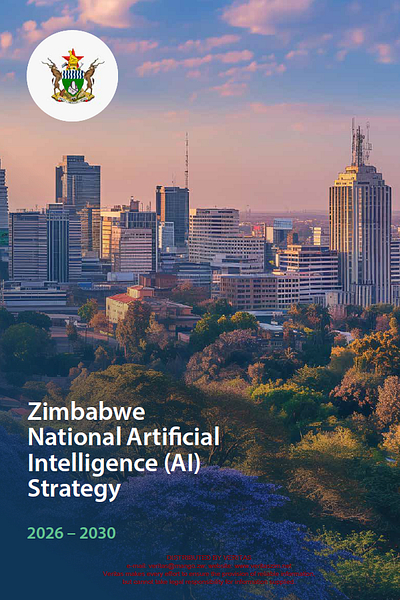
Zimbabwe to put AI at the heart of its economy
A five-year roadmap aims to make Zimbabwe Southern Africa’s AI hub

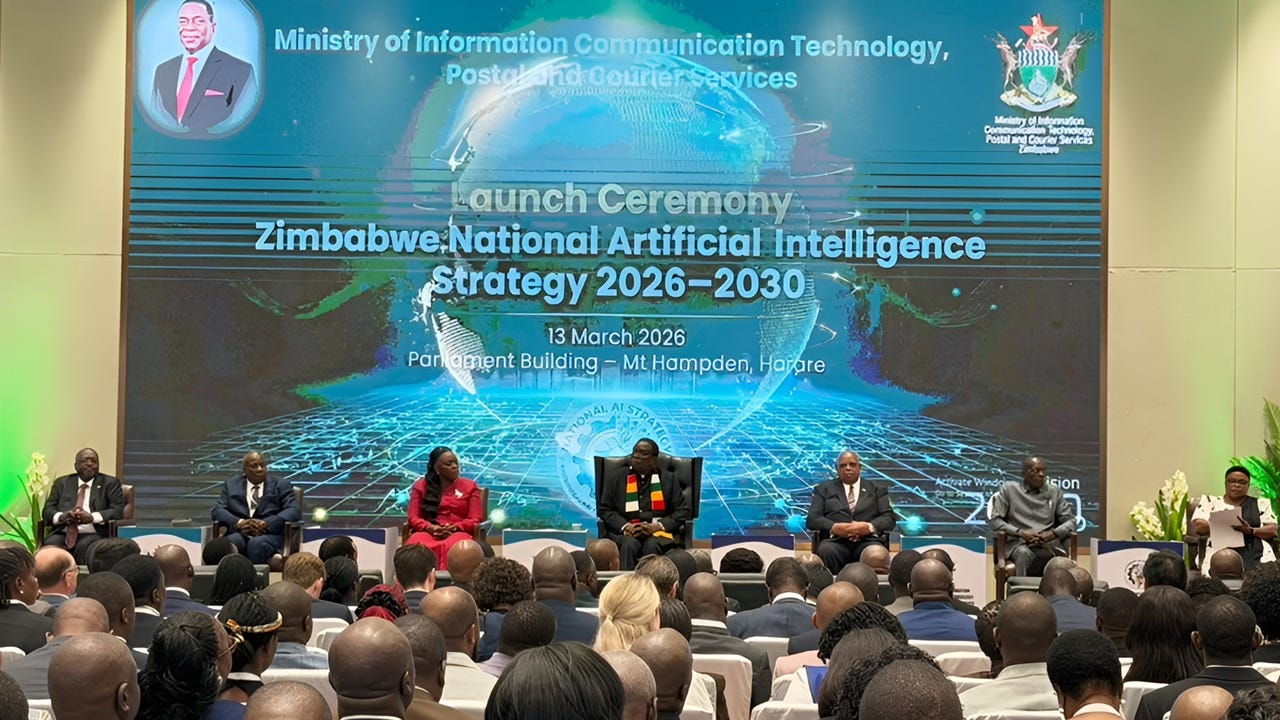
#Zimbabwe #AIstrategy – Zimbabwe’s President Emmerson Mnangagwa has launched a national AI strategy covering 2026 to 2030, at an event held at the Parliament Building in Harare on Friday. First announced in 2025, the Zimbabwe National Artificial Intelligence Strategy sets out to transform the country from a resource-dependent economy into a knowledge-driven one, with AI applied across agriculture, mining, healthcare, finance and education. The government aims to position Zimbabwe as the leading hub for inclusive and sustainable AI development across Southern Africa.
SO WHAT? – For a country still building its digital foundations, the launch of the National Artificial Intelligence (AI) Strategy is an ambitious step for Zimbabwe. The strategic plan focuses on home-grown innovation with a special emphasis on sovereign AI and data. This aligns with the policies of AI leaders across the world that have prioritised owning and controlling their data infrastructure, rather than depend on foreign platforms. Competing with neighbouring South Africa, which has an economy eight times its size, Zimbabwe will face many challenges in creating a regional AI hub. However, it is also true that smaller countries can often move faster to implement national technology programmes.
Here are some key points regarding the AI strategy launch:
Zimbabwe launched its National Artificial Intelligence Strategy 2026–2030, with a stated ambition to establish the country as an inclusive and sustainable bub AI for development in Southern Africa. The strategy was developed by the Ministry of Information Communication Technology Postal & Courier Services together with key stakeholders and following a number of multi-stakeholder consultations.
Approved by the Cabinet of Ministers in October 2025, the strategy was launched by President Emmerson Mnangagwa on Friday at the Parliament Building in Harare and sets out a national framework to drive economic transformation through AI, targeting sectors including agriculture, mining, healthcare, finance and education.
The strategy rests on six pillars:
AI talent and capacity development;
National AI infrastructure and computational sovereignty;
AI adoption and service transformation;
Governance, ethics and regulation;
Research, development and innovation; and
International collaboration and diplomacy.
A national AI and data platform, known as Project Pangolin, will provide secure, sovereign computing infrastructure and national datasets. It is designed to give Zimbabwean researchers and developers access to the computational resources needed to build local AI solutions.
The Mugove/Umqele/Isabelo Fund, a national AI and innovation fund, will co-invest government capital alongside private investors in certified AI startups, with the goal of accelerating a domestic AI industry.
The strategy also introduces a national AI regulatory sandbox called the Innovation Crucible, which will allow startups to test AI products under temporary regulatory flexibility. The first cohort is expected to include five to seven fintech and telecoms companies.
A national AI literacy campaign, branded Nzwisiso.ai, aims to reach 60% of Zimbabwe’s adult population by 2030, making it one of the more ambitious public awareness targets in any African AI strategy to date.
Meanwhile, an annual competition called the Zimbabwe AI Grand Challenge will invite innovators to develop AI solutions to pressing national problems. The first challenge focuses on food security, a critical priority for a country that has faced repeated agricultural shocks.
The implementation of the National Artificial Intelligence Strategy has been planned in three phases:
The Sprint - a foundation-building sprint covering the first 100 days and early 2026;
The Build - an 18-month build phase to deliver core infrastructure and launch key programmes; and
The Scale - a scaling phase running through to 2030, focused on sector-wide adoption and regional leadership.
Governance will sit with a newly established National AI Council and an AI Strategy Implementation Office, supported by technical working groups and a monitoring and evaluation framework tracking metrics including AI literacy rates, infrastructure capacity and public trust.
ZOOM OUT – Most national AI strategies default to governance frameworks borrowed from the EU or US, anchored in Western liberal traditions of individual rights and market regulation. Zimbabwe's approach is deliberately different. Its governance pillar is anchored in Ubuntu, the Bantu philosophical tradition whose central tenet "I am because we are" places collective well-being above individual or commercial interest. It is a worldview that defines a person not in isolation but through their relationships with others, their community, their ancestors and future generations. So, the Zimbabwe’s AI Governance, Ethics and Regulatory Framework aims to mandate that AI systems should be designed to promote social cohesion, shared humanity and collective well- being.
[Written and edited with the assistance of AI]
LINK
Zimbabwe National AI Strategy (website)