
Mauritius launches new National AI Strategy
Ethical AI framework and blueprint for public sector accompany strategy


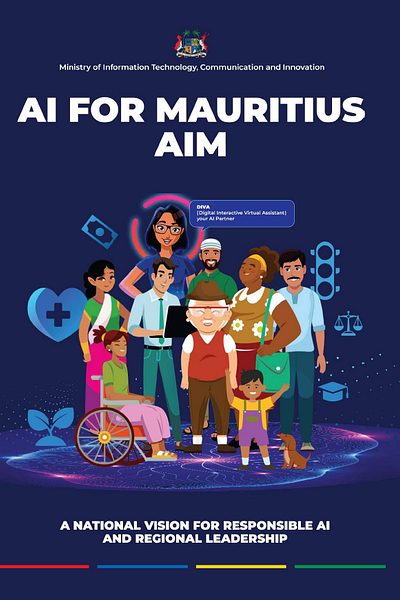
#Mauritius #AIstrategy — Mauritius has officially launched its National Artificial Intelligence Strategy 2025–2029 alongside a new ethical framework called the FAIR Guidelines, and a Digital Transformation Blueprint for the country’s public sector. Unveiled at an event on Friday April 10th in Phoenix by the Minister of Information Technology, Communication and Innovation Dr Avinash Ramtohul, the new strategy aims to position Mauritius as a trusted regional AI leader by 2029. The strategy is developed and managed by a newly established government AI Unit, a citizen-facing AI assistant called DIVA, and a Regional AI Marketplace designed to connect startups, businesses and public institutions across Africa and beyond.
SO WHAT? — Mauritius is a small, open, services-driven economy with strong institutions and a track record of punching above its weight in financial and digital services. The country’s new strategy gains immediate credibility because it was co-designed via a Public-Private-People Partnership model rather than imposed as a top-down policy approach. Together with national AI governance and ethics guidelines and a digital transformation plan for the public sector, it is clear that much work has been done on the practicalities of implementation. Meanwhile, the inclusion of DIVA as the default AI interface for every government mobile service is a concrete, immediate commitment. So, for a nation of 1.3 million people, the national AI ambition appears proportionate, grounded and well-structured.
KEY POINTS:
Mauritius held a launch event in Phoenix for its National AI Strategy 2025–2029 on April 10th. Co-designed with via a Public-Private-People Partnership model, the strategy embodies contributions from the public and private sectors, academia, civil society and trade unions. The government defines the approach as a defining feature of its digital transformation agenda.
The National AI Strategy identifies AI as a new pillar of socio-economic transformation, with a national vision to build an innovation ecosystem that nurtures startups, supports applied research and strengthens collaboration between government, industry and academia.
The new strategy is built around six strategic priorities:
data and compute infrastructure,
skills and human capital;
AI-driven economic innovation;
responsible AI in government;
international and regional engagement; and
research and knowledge systems to inform policy
A new government AI Unit was established under the Ministry of Information Technology, Communication and Innovation last year, headed by Ramakrishna Mudaliar. The unit will serve as a central engine for cross-government AI adoption and strategy implementation.
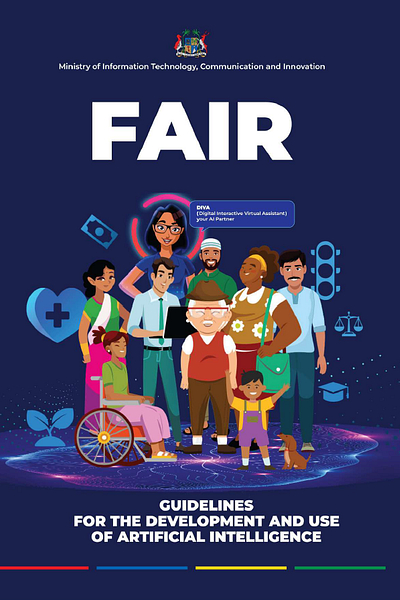
The government also released FAIR Guidelines, providing an ethical framework for AI development and use in Mauritius, grounded in Fairness, Accountability, Inclusiveness and Integrity, and Responsibility. The guidelines are designed to ensure AI adoption across the country remains transparent, trustworthy and people-centred.
DIVA (the Digital Interactive Virtual Assistant) was also announced at the event as the default AI interface for every government mobile service. The bot is positioned it as a 24-hour AI companion for citizens accessing public services. It represents one of the most concrete near-term deliverables of the strategy, impacting the public-at-large with immediate effect0.
A Regional AI Marketplace has been launched by the new AI Unit website, connecting solution providers, startups, businesses and public institutions to accelerate the development and deployment of AI solutions across the region.
KOREK (a super app) has also been introduced as a one-stop platform for government services, complementing DIVA and reflecting the government’s broader push to digitise public service delivery across Mauritius, Rodrigues and surrounding islands.
The strategy was developed with strategic input from the United Nations Development Programme and the UN Office, adding an international governance dimension and reinforcing Mauritius’ commitment to aligning its AI agenda with global responsible AI standards.
AI GUIDELINES — The government’s new FAIR Guidelines set out a shared, non-binding framework to guide responsible AI development and usage across Mauritius. Built around four core values — Fairness, Accountability, Inclusiveness and Integrity, and Responsibility — the guidelines apply across all sectors and at every stage of an AI system's lifecycle, from design and development through to deployment, monitoring and decommissioning. They are intentionally practical rather than theoretical, reflecting the realities of a small, open economy while remaining aligned with international best practice. The FAIR Guidelines do not create legal obligations, but instead, they sit alongside existing legislation and the new National AI Strategy as part of a layered governance framework designed to build public trust and support.
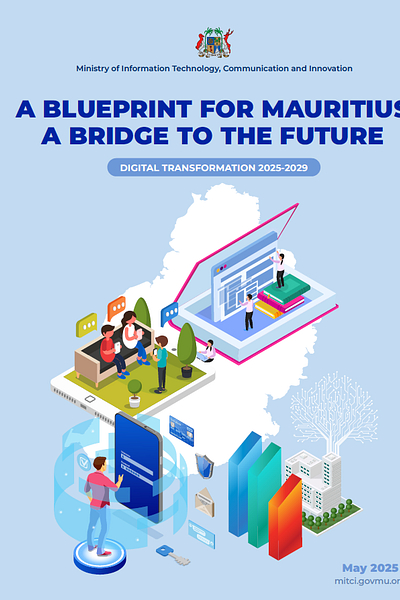
PUBLIC SECTOR BLUEPRINT — Mauritius’s Digital Transformation Blueprint 2025–2029 sets out a structured roadmap to guide public sector transformation. The Blueprint was developed across four strategic pillars: building state-of-the-art digital infrastructure, developing digital skills across the entire population, driving private sector innovation and startup growth, and embedding sustainability into the country’s digital future. The Blueprint is designed to transform public service delivery through a unified government portal harnessing an AI assistant and a super app built. It also supports the government’s vision as a inclusive digital nation where no citizen is left behind.
[Written and edited with the assistance of AI]
DOWNLOADS
LINKS
Mauritius AI Unit (website)
Regional AI Marketplace (website)
Read more about national AI strategies:
Ghana approves $250M AI Hub & National AI Strategy (Africa AI News)
Zimbabwe to put AI at the heart of its economy (Africa AI News)
New ‘AI Made in Morocco’ strategy (Middle East AI News)
AI stakeholders advance Algeria’s national strategy (Middle East AI News)