
Zimbabwe unpacks national strategy, launches AI Grand Challenge
Young innovators challenged to build AI solutions for real national problems

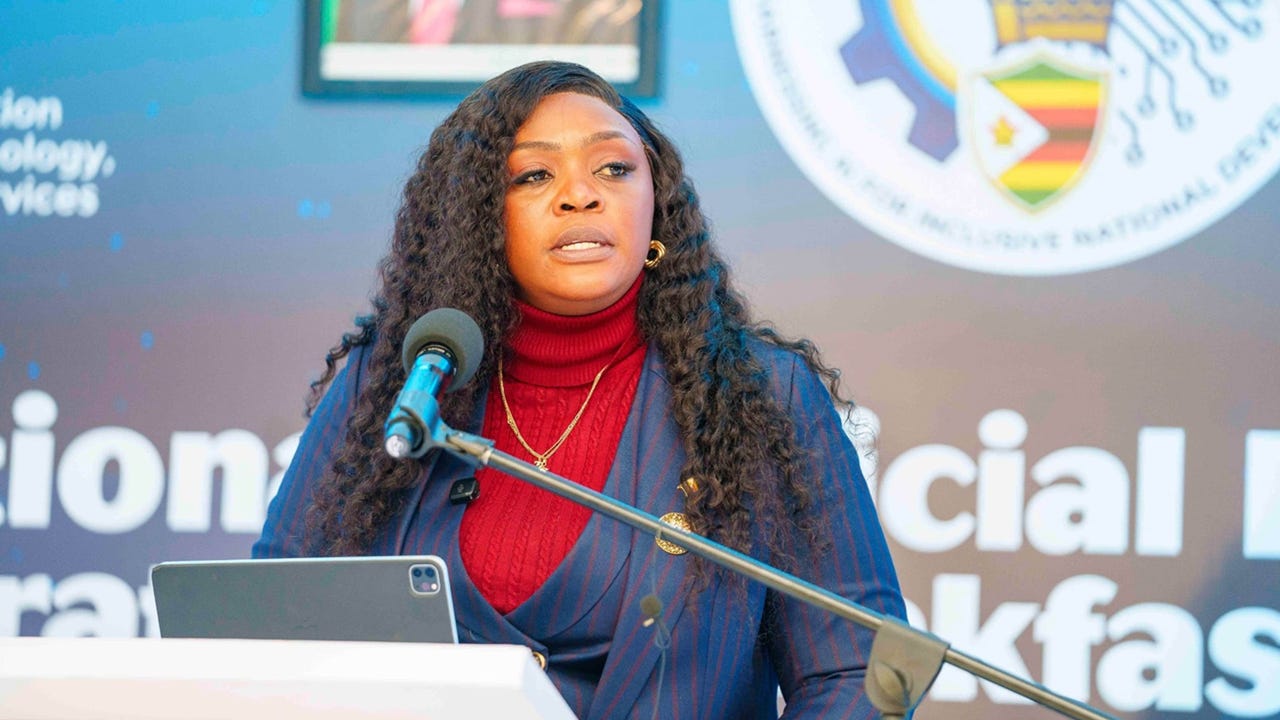
#Zimbabwe #AIStrategy – Zimbabwe’s Ministry of ICT, Postal and Courier Services has unpacked the Zimbabwe National Artificial Intelligence Strategy 2026–2030 and launched the AI Grand Challenge at an event in Harare this week. The Minister of ICT Hon. Tatenda Mavetera called for practical, inclusive AI solutions addressing the country’s most pressing development priorities. The minister chose her examples carefully, mentioning AI to support healthcare access for rural mothers, financial tools for market traders, climate-smart resources for farmers, and improved educational outcomes for children. Designed as an annual competition, the AI Grand Challenge invites innovators to develop AI solutions to national problems, with the first challenge focused on food security.
SO WHAT? – This week's event marks another step forward following the strategy launch by President Emmerson Mnangagwa in March, which set out the country's ambitious vision to transform from a resource-dependent economy into a knowledge-driven one. This week's event unpacked some of of the strategy's detail and launched one of its first programmes: the AI Grand Challenge. For a country still building its digital foundations, anchoring the strategy’s launch with a mechanism for young innovators to contribute to the national effort is a smarter activation than simply establishing policy. Whilst it is true that Zimbabwe competes a neighbour whose economy is eight times its size, smaller countries can often move faster with national technology initiatives than larger ones.
KEY POINTS:
Zimbabwe’s National AI Strategy 2026–2030 was unpacked at a public event in Harare, held under the theme “AI for Impact” and addressed by Minister of ICT Hon. Tatenda Mavetera, who challenged innovators, technology leaders and young entrepreneurs to develop AI that delivers meaningful results rather than theoretical sophistication.
The event saw the launch of the AI Grand Challenge, an annual competition inviting young innovators to develop solutions to pressing national problems. The first challenge focuses on food security, a critical priority for a country that has faced repeated agricultural shocks.
The strategy was approved by Cabinet in October 2025 and launched by President Emmerson Mnangagwa at event in March 2026. The strategy prioritises economic transformation through AI across agriculture, mining, healthcare, finance and education, with an ambition to position Zimbabwe as Southern Africa’s leading hub for inclusive and sustainable AI development.
The National AI Strategy has six pillars: AI talent and capacity development; national AI infrastructure and computational sovereignty; AI adoption and service transformation; governance, ethics and regulation; research, development and innovation; and international collaboration and diplomacy.
Project Pangolin, a national AI and data platform, will provide secure, sovereign computing infrastructure and national datasets. The platform aims to give Zimbabwean researchers and developers access to the computational resources needed to build locally relevant AI solutions, limiting dependence on foreign platforms and datasets.
The Mugove/Umqele/Isabelo Fund is a national AI and innovation fund designed to co-invest government capital alongside private investors in certified AI startups, with the goal of accelerating a domestic AI industry from within.
The Innovation Crucible, a national AI regulatory sandbox, will allow startups to test AI products under temporary regulatory flexibility. The first cohort is expected to include five to seven fintech and telecoms companies.
Nzwisiso.ai, a national AI literacy campaign, has been set the ambitious target of reaching 60% of Zimbabwe’s adult population by 2030.
The government has set out three phases of implementation: a 100-day foundation-building sprint in early 2026; an 18-month build phase to deliver core infrastructure and launch key programmes; and a scaling phase running through to 2030, focused on sector-wide adoption and regional leadership.
The newly established National AI Council and an AI Strategy Implementation Office will be responsible for governance of the strategy implementation. These entities will be supported by technical working groups and a monitoring and evaluation framework tracking AI literacy rates, infrastructure capacity and public trust.
AI GRAND CHALLENGE - This week the government launched an annual national competition inviting schoolchildren, university students, researchers, startups, entrepreneurs and other stakeholder to develop AI solutions to Zimbabwe's most pressing problems. The AI Grand Challenge aims to tackle issues from boosting maize yields, to reducing child mortality, to building AI-powered disaster early warning systems, and creating applications in Shona (Karanga) and Ndebele languages. Winners stand to receive funding, platform access, pilot contracts and international exposure. Meanwhile, all participants will benefit from mentorship, AI training and access to national datasets. The first challenge, which targets food security, has already gained traction with over 50 qualified teams registering. The goal for the winning AI solution is for it to reach 25 percent of its targeted population of farmers in the country.
[Written and edited with the assistance of AI]
DOWNLOAD
Read our March 2026 article about the draft national strategy:
Zimbabwe to put AI at the heart of its economy (Africa AI News)