
Kenya Cabinet forms committee to drive national AI strategy
Standing committee to steer responsible AI adoption and policymaking

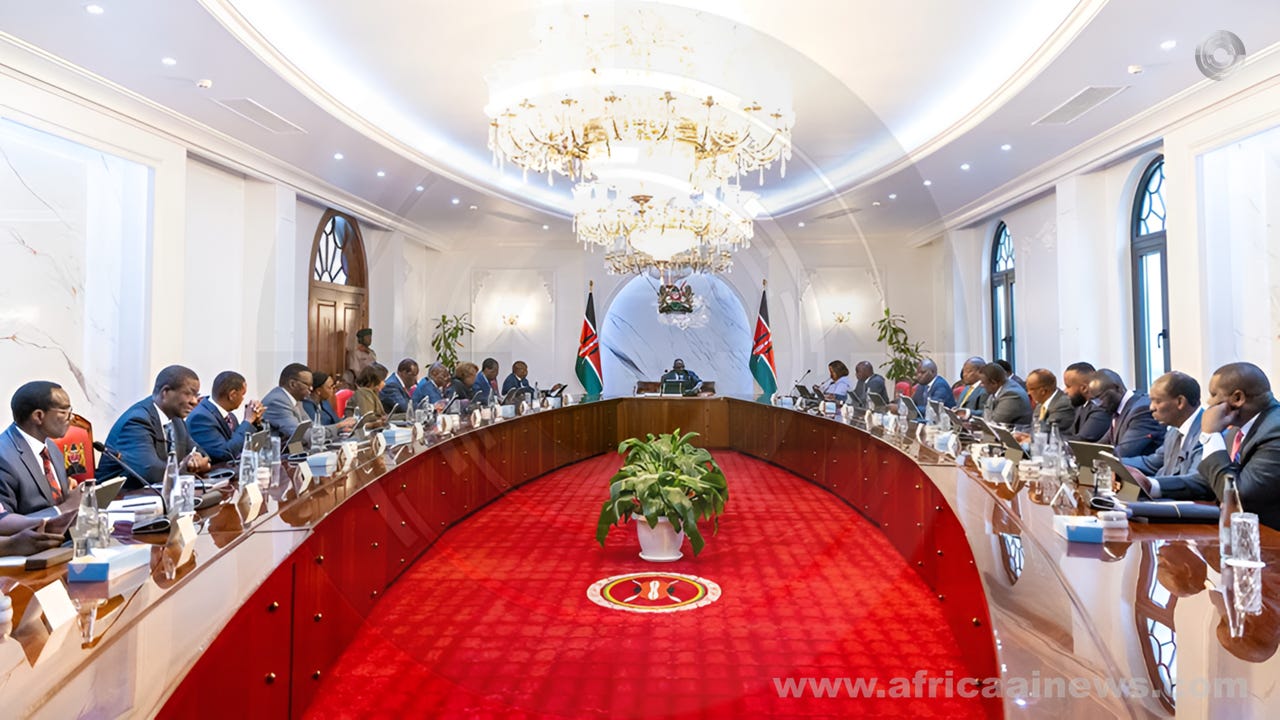
#Kenya #AIstrategy — Kenya’s Cabinet has formed a Standing Cabinet Committee on Artificial Intelligence to drive the country’s national AI strategy, coordinate policy across government and position Kenya as a regional leader in responsible AI development. The move builds on the Kenya Artificial Intelligence Strategy 2025-2030, launched last year by the Ministry of Information, Communications and The Digital Economy. The Cabinet also adopted a National Business Process Outsourcing Policy, targeting a greater share of the global BPO market, which is projected to exceed KSh 68 trillion ($526b) by 2030.
SO WHAT? — Creating a standing Cabinet committee puts high-level AI coordination at the centre of government decision-making. However, this is not a replacement for the National AI Steering Committee chaired by the Ministry of Information, Communications and the Digital Economy, which guided the development of the Kenya AI Strategy. Instead this move is likely to better define responsibility in the Cabinet for coordinating with the MICDE on national initiatives and how AI policy issues are handled in Parliament.
KEY POINTS:
Kenya’s Cabinet has formed a Standing Cabinet Committee on Artificial Intelligence to steer the national AI agenda, coordinate policy across ministries and position the country as a regional hub for responsible AI development and adoption.
The committee’s remit covers AI-driven innovation, public service delivery improvements, job creation and inclusive economic growth, alongside putting governance frameworks and safeguards in place.
In the same Cabinet session, Kenya adopted a National Business Process Outsourcing Policy designed to attract international investment, create jobs for young people and grow the country’s share of the global BPO market.
The global BPO market is projected to exceed KSh 68 trillion ($526b) by 2030, and Kenya’s policy targets that opportunity by drawing on the country’s English-speaking workforce, time zone position and existing digital infrastructure.
The formation of the Cabinet committee builds on the Kenya Artificial Intelligence Strategy 2025-2030, launched in March 2025. The strategy is built on three pillars: AI digital infrastructure; data and AI governance; and AI research, innovation and commercialisation, with a focus on developing localised models for agriculture, healthcare, education and public services.
Kenya’s 2025-2030 AI strategy was developed with support from the European Union, Germany’s Federal Ministry for Economic Cooperation and Development, the International Development Research Centre and the UK’s Foreign, Commonwealth and Development Office.
AI is projected to add some $2.4 billion to Kenya’s economy by 2030, according to research by Public First, while Kenya’s ICT market is forecast to reach $14.92 billion by the same year.
ZOOM OUT — The Cabinet committee's formation follows months of legislative activity and parliamentary debate. In February 2026, a draft Artificial Intelligence Bill was brought to the Senate proposing an independent Office of the Artificial Intelligence Commissioner. The bill also recommended a four-tier risk classification system modelled on the EU AI Act, and fines of up to KES 5 million (around $40,000) plus two-year prison terms for creating or distributing harmful AI-generated content. The Senate then directed the Ministry of Information, Communication and Digital Economy to draft a national AI policy covering research, ethical guidelines, regulatory sandboxes and AI education.
[Written and edited with the assistance of AI]
Source: Kenya’s Cabinet
Read more about Kenya’s AI and tech policy:
Kenya in talks to host East Africa’s first Open AI Academy (Africa AI News)
Eight African nations rank in top 25 for AI readiness in BPO (Africa AI News)
Kenya’s Senate orders new AI policy following new AI bill (Africa AI News)