
Libya launches National AI Strategy with 35 initiatives
Prime Minister Dbaiba adopts AI Ethics Charter at official ceremony

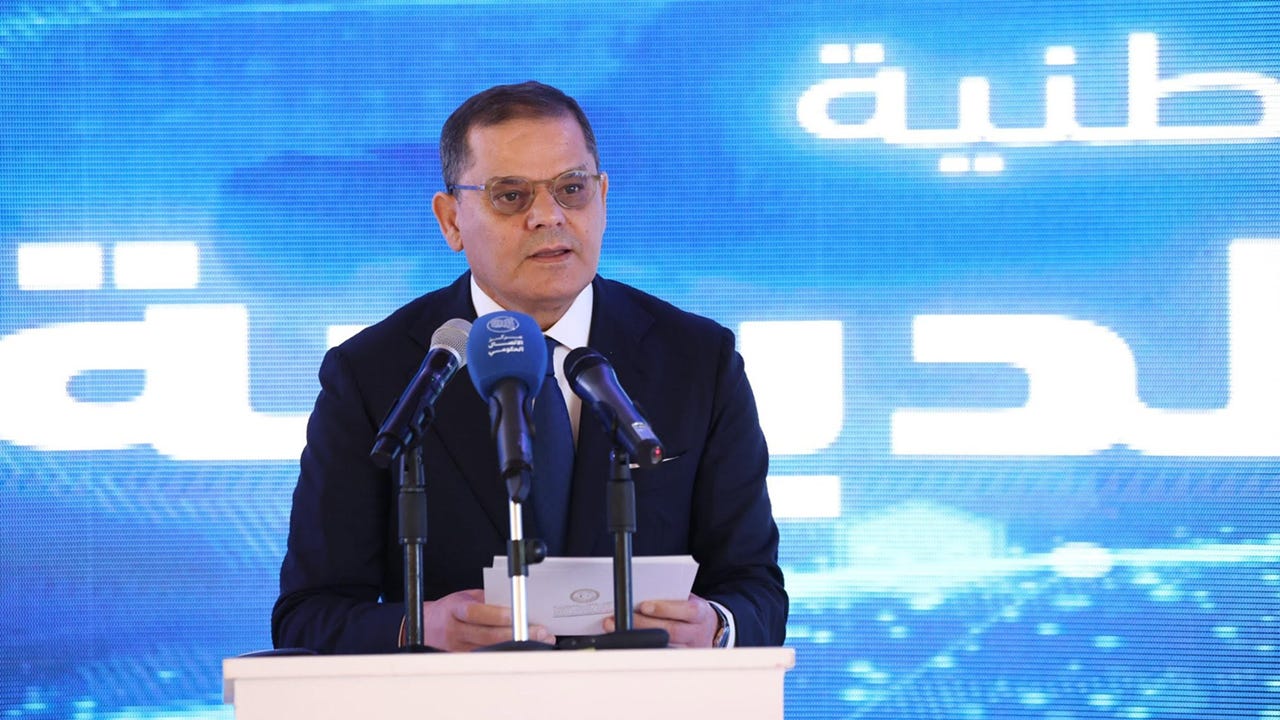
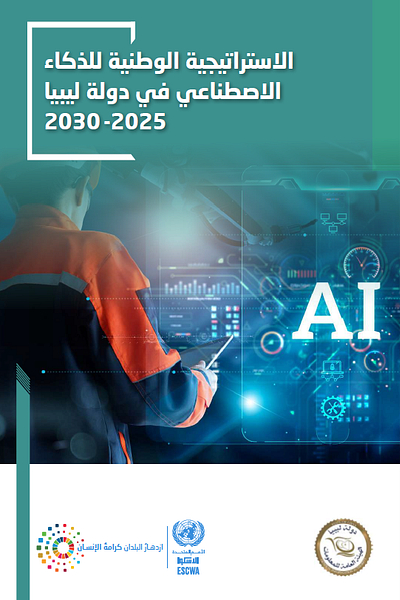
#Libya #AIstrategy – Libyan Prime Minister Abdulhamid Dbaiba of the Government of National Unity has announced the adoption of an Artificial Intelligence Ethics Charter and launched the National Artificial Intelligence Strategy 2026–2030. Unveiled at an official ceremony in Tripoli last week, the strategy sets out 35 initiatives across six pillars: governance, legislation and ethics, infrastructure and data, human capital, innovation and priority sectors, and monitoring and evaluation. Key targets under the strategy include enabling 80 percent of government entities to use AI solutions, training 10,000 employees in advanced technology fields, supporting 100 AI startups, automating 50 percent of government transactions, and digitising 70 percent of paper records by 2030.
SO WHAT? – Libya is entering the national AI strategy landscape at a moment when a growing number of African nations are racing to establish governance frameworks and digital transformation plans for AI. For a country such as Libya, with a complex political environment, the adoption of both a strategy and an ethics charter simultaneously is a significant signal of intent. To its credit, the government is frank about its starting point, acknowledging the absence of a unified national AI body, legislative fragmentation, limited data availability, and skills shortages. The new strategy sets out a structured, phased path to address each of these gaps.
KEY POINTS:
Libyan Prime Minister Abdulhamid Dbaiba launched the National AI Strategy 2026–2030 and adopted an AI Ethics Charter at an official ceremony in Tripoli on 1 June 2026, overseen by the recently appointed Minister of State for Digital Economy and Artificial Intelligence Ziad al-Hajjaji. The strategy represents Libya’s first comprehensive national framework for AI-led digital transformation.
The strategy is built around six pillars, covering institutional design through to citizen-facing service delivery and measurement:
governance and leadership;
legislation and ethics;
infrastructure and data;
human capital and education;
innovation and priority sectors; and
monitoring and evaluation.
Meanwhile, The Ethics Charter places human beings at the centre of the AI process, explicitly stating that AI systems are tools to support human decision-making rather than replace it. This issue is becoming particularly sensitive sectors such as health, justice and security. The ethics charter commits to justice, transparency, accountability and protection of digital sovereignty.
Key quantitative targets by 2030 include:
enabling 80% of government entities to use AI solutions;
activating national digital identity for 70% of the population;
training 10,000 government employees in advanced technology fields;
supporting 100 AI startups;
automating 50% of government transactions; and
converting 70% of paper records to digital systems.
Priority sectors for early AI deployment include health, financial services, education and public services, with pilot projects planned before expansion to national security and energy. Specific initiatives identified in the strategy document include AI-powered early disease diagnosis for diabetes and cancer, personalised learning platforms for students, and AI models for fraud and money laundering detection.
Infrastructure initiatives include a Libya Sovereign Cloud planned for launch between 2026 and 2027, a Unified National Digital ID system by 2027, and a National Data Exchange Platform by 2028. A key principle running through the infrastructure pillar is data decoupling: separating data from legacy applications to enable future flexibility.
The government plans to build governance structures from scratch. A National Artificial Intelligence Authority is planned under the Cabinet, alongside appointment of a Chief AI Officer and establishment of an Executive Office for AI Initiatives within the Ministry of Planning. In addition, a National Ethics Committee for AI is scheduled for 2027.
Human capital development is a central pillar of the new strategy, with plans to launch a National Academy for Artificial Intelligence by 2028, integrate AI and digital ethics into school and university curricula by 2027, and establish national AI incubators for startups. The strategy also commits to providing scholarships and specialised AI training.
The National Artificial Intelligence Strategy 2026–2030 is explicit about the challenges it must overcome, citing the absence of a unified national AI body, legislative fragmentation, limited availability of high-quality data, and shortages in specialised skills as the primary weaknesses it is designed to address.
ZOOM OUT - 2026 has already proved to be a busy year for African AI policymaking. This year has already seen Ghana, Mauritius, Morocco, Mozambique and Zimbabwe launch national AI strategies, while the sharing of South Africa’s draft National AI Policy has stirred intense debate. These new launches follow strategies already put in place by Algeria, Benin, Cameroon, Côte d’Ivoire, Egypt, Ethiopia, Kenya, Mauritania, Namibia, Nigeria Rwanda, Senegal, Tunisia and Zambia. So, the Libyan National Artificial Intelligence Strategy is by no means one of the first to be announced in Africa, but most African strategies in place remain quite new and in their first phases. The Libyan government deserves credit for prioritising AI and setting national goals to capitalise on the opportunities and guard against the risks of the technologies.
[Written and edited with the assistance of AI]
Source: GIA, LANA
DOWNLOAD
Read more about African national AI strategies:
Rwanda creates dedicated National AI Agency (Africa AI News)
Zimbabwe unpacks national AI strategy (Africa AI News)
Mozambique presents draft AI Strategy (Africa AI News)
Ghana launches AI strategy (Africa AI News)
Mauritius launches new National AI Strategy (Africa AI News)